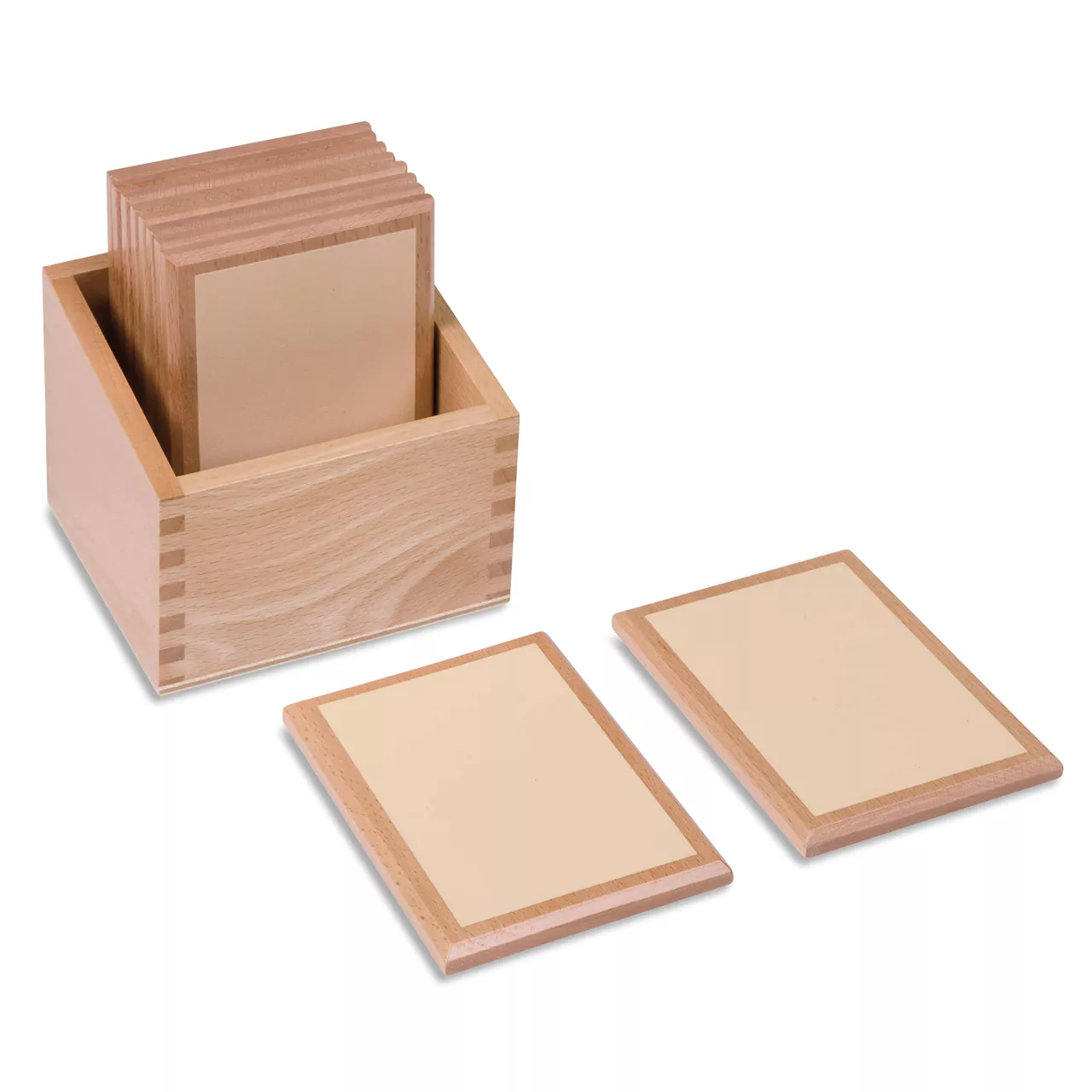
Material Name: Smooth Gradation Tablets – Montessori Smooth Gradation Tablets
Curriculum Area: Sensorial (Tactile Sense)
Purpose & Developmental Benefits
The Smooth Gradation Tablets refine the child’s tactile sense through touching, comparing, and arranging tablets with varying degrees of smoothness and roughness. Children learn to discriminate very subtle differences along a continuum from rough to smooth, strengthening tactile awareness and sensitivity. This refined hand perception forms an important foundation for fine motor development and later academic work.
Skills Developed
-
Discriminating and comparing different degrees of roughness and smoothness
-
Refining the tactile sense through fingertip exploration
-
Developing concentration and orderly work through sequencing (from rough to smooth)
-
Strengthening hand–eye coordination and fine motor control through handling and arranging the tablets
-
Expanding descriptive sensory language: rough, coarse, smooth, very smooth
-
Indirect preparation for writing and activities requiring precise control of hand pressure
Recommended Age
Material & Construction
-
A set of rectangular tablets sized appropriately for a child’s hand
-
Each tablet is covered with a different textured surface, arranged in a gradual progression toward increased smoothness
-
Wooden base/frame with smooth, child-safe surfaces
-
Clear tactile contrasts between tablets support independent grading and natural control of error
Classroom & Home Use
Used in the Sensorial (Tactile Sense) area. Children typically work by covering their eyes (or with eyes open at first), exploring each tablet with their fingertips, comparing textures, and arranging them in order from rough to smooth. The teacher or adult introduces vocabulary using the Three-Period Lesson.
At home, it is recommended to present a limited number of tablets at a time and to keep the work separate from other materials in order to maintain concentration and accuracy in tactile discrimination.