Material Name: Geometry Solids – Montessori Geometry Solids
Curriculum Area: Sensorial & Geometry
Purpose & Developmental Benefits
The Geometry Solids introduce children to three-dimensional (3D) geometric forms through hands-on exploration—holding, turning, observing, and comparing. Rather than learning shapes only from paper representations, children experience geometry through touch and movement, enabling a clear understanding of the differences between solids such as the sphere, cylinder, cone, and cube.
This material serves as an important bridge from sensorial experience to abstract geometric thinking.
Skills Developed
-
Recognizing and naming basic three-dimensional geometric solids
-
Discriminating characteristics of solids: curved vs. flat surfaces, pointed vs. rounded forms, presence or absence of faces, edges, and vertices
-
Developing the stereognostic sense (identifying objects through touch alone), often through blindfolded activities
-
Comparing, classifying, and grouping solids into families
-
Refining hand–eye coordination and fine motor control when handling and placing solids on stands
-
Preparing for later concepts such as surface area, volume, perimeter, and the relationship between 3D solids and 2D shapes
Recommended Age
Material & Construction
The standard Nienhuis set includes ten blue solids, made from beechwood combined with lightweight, durable materials.
Three transparent stands are included for solids with curved surfaces.
The typical set consists of the following ten solids:
-
Cube
-
Rectangular prism
-
Triangular prism
-
Cylinder
-
Cone
-
Sphere
-
Ellipsoid
-
Ovoid
-
Square pyramid
-
Triangular pyramid
Recommended Companion Material
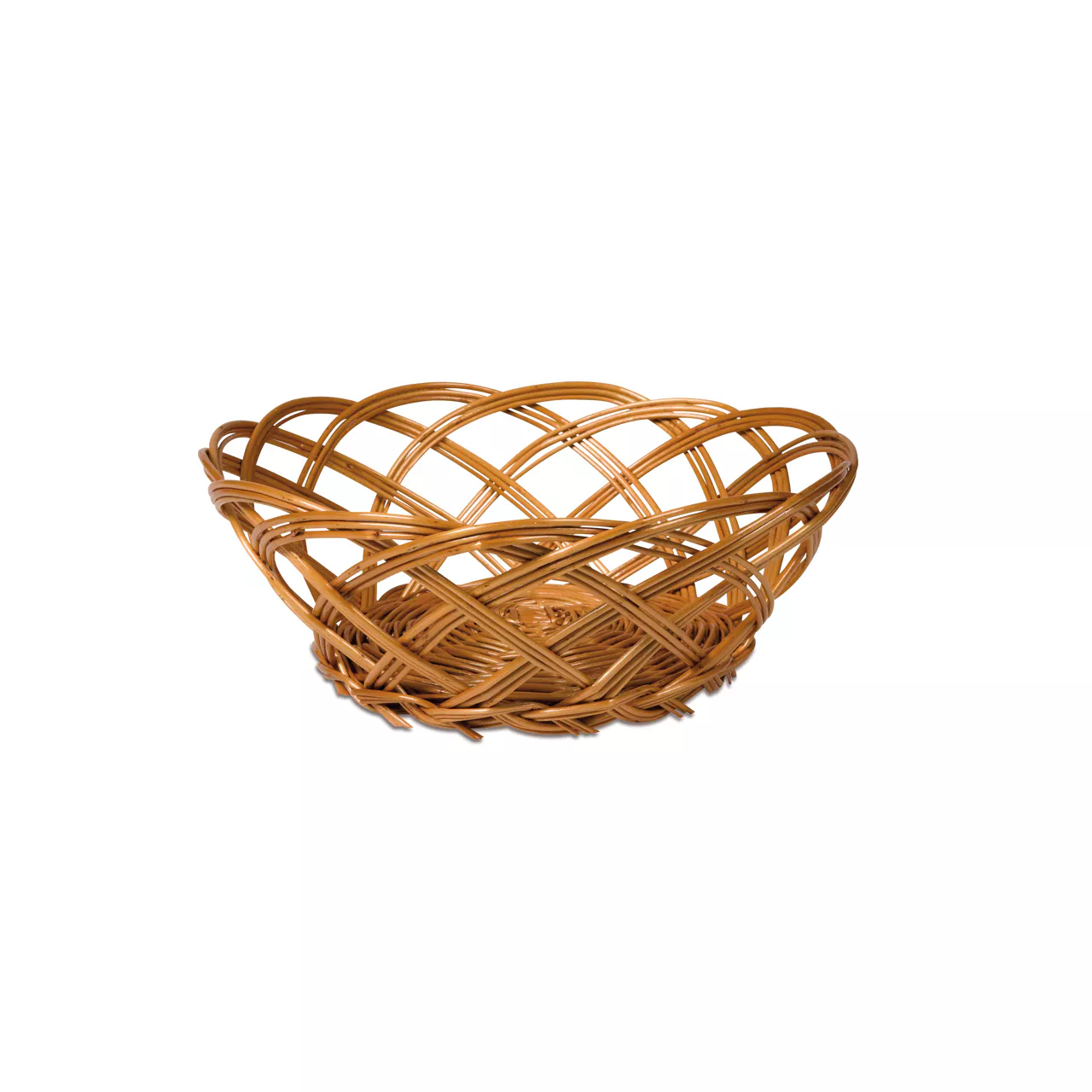
Geometric Solids Basket:
A basket or tray used to organize and store the solids neatly, allowing children to independently choose and return materials according to Montessori principles. When solids are arranged by groups (curved-surface solids, solids with vertices, prism-shaped solids, etc.), children can easily observe, select, and practice classification and comparison without overload.
This is also the standard preparation for lessons, especially for blindfolded (stereognostic) activities or matching solids with real-life objects.
Classroom & Home Use
Children explore each solid by holding, rotating, placing, and observing it carefully. Activities include:
-
Comparing solids with and without edges
-
Distinguishing curved and flat surfaces
-
Matching solids with real-life objects in the environment (ball, can, box, etc.)
-
Language lessons focused on naming and describing the characteristics of each solid
At home, it is recommended to present the solids in small groups (e.g., curved solids or solids with vertices), placed on a low shelf with a clearly defined work mat to support concentration.